R135 million. One bid. One of Cape Town's most significant inner-city sites off the market.
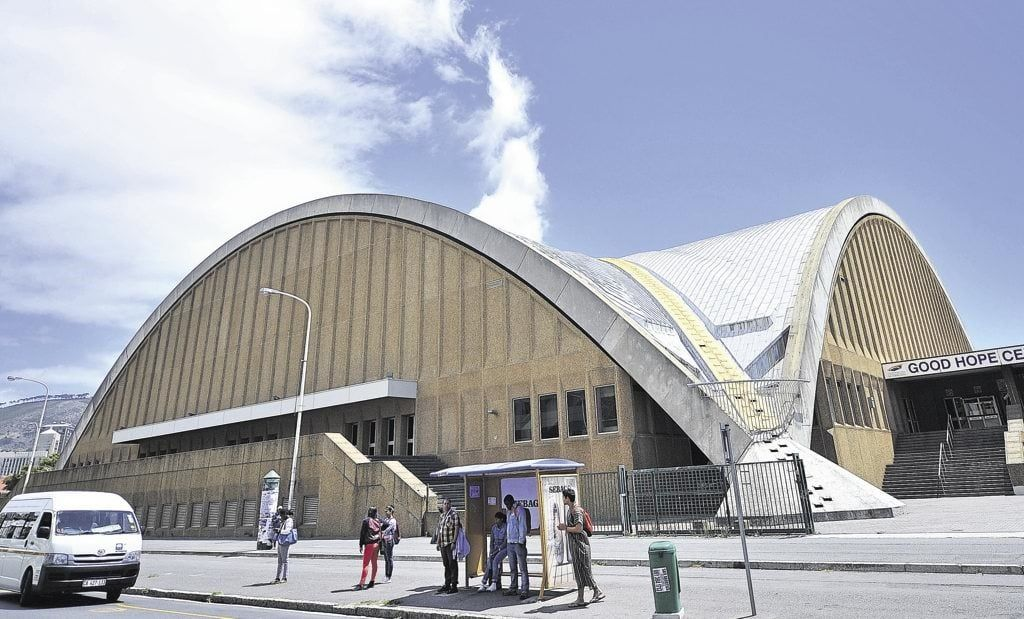
The Good Hope Centre ‘sold’ on 26 February to Spirit Revelation Ecclesia, a ministry planning to use the dome for worship and mass gatherings. Before we move on, it's worth asking what else this site could have been.
The site
2.4 hectares at 11 Sir Lowry Road. Walking distance from the CBD and the CPUT District Six campus. The dome — designed by Pier Luigi Nervi in 1976 — held the world's largest precast concrete cross-vault roof at the time of construction. Grade 3B heritage protection means it stays. It's not a constraint; it's the centrepiece, and the 2.4 hectares around it is the development platform.
The precedent
Vienna's Gasometer City converted four protected industrial gas holders into 615 apartments, offices, retail, a student dormitory and the Vienna National Archive — affordable housing designed in from day one, not bolted on as a concession. The project became a neighbourhood. Zeitz MOCAA showed Cape Town is more than capable of the same quality of thinking.
What could have been built
The dome as a civic anchor and revenue engine. Before its decline, the building was generating close to R7 million a year — neglected, on month-to-month leases, with no active programming behind it. A properly operated events venue under private management, with a long-term lease providing effective quasi-ownership, would generate multiples of that. The developer wouldn't be carrying a heritage burden; they'd be handed one of the most distinctive event venues in the country with 50 years of runway.
Around it
Affordable rental housing at 30–40% of the residential mix, student accommodation for the adjacent CPUT campus, mid-tier commercial. And a formal acknowledgement of District Six — 60,000 people were forcibly removed from land that borders this site. A development that ignores that history deserves the resistance it gets.
The question nobody's answering
Why sell outright rather than a 50- or 99-year ground lease? Singapore, Hong Kong, Amsterdam and Canberra manage well-located public land this way. The developer builds and profits from the improvements; the city retains ownership, earns income across the lease term, and keeps real leverage over what gets built. R135 million spread across 50 years is not a remarkable number. The land value of this precinct will compound significantly over that period — the question is who benefits.
Once land is sold, it can't be unsold. The bid is still subject to Council approval. What gets built here — and who it serves — isn't finalised yet. But the window is closing.