The Durban precinct serious investors haven't looked at hard enough.
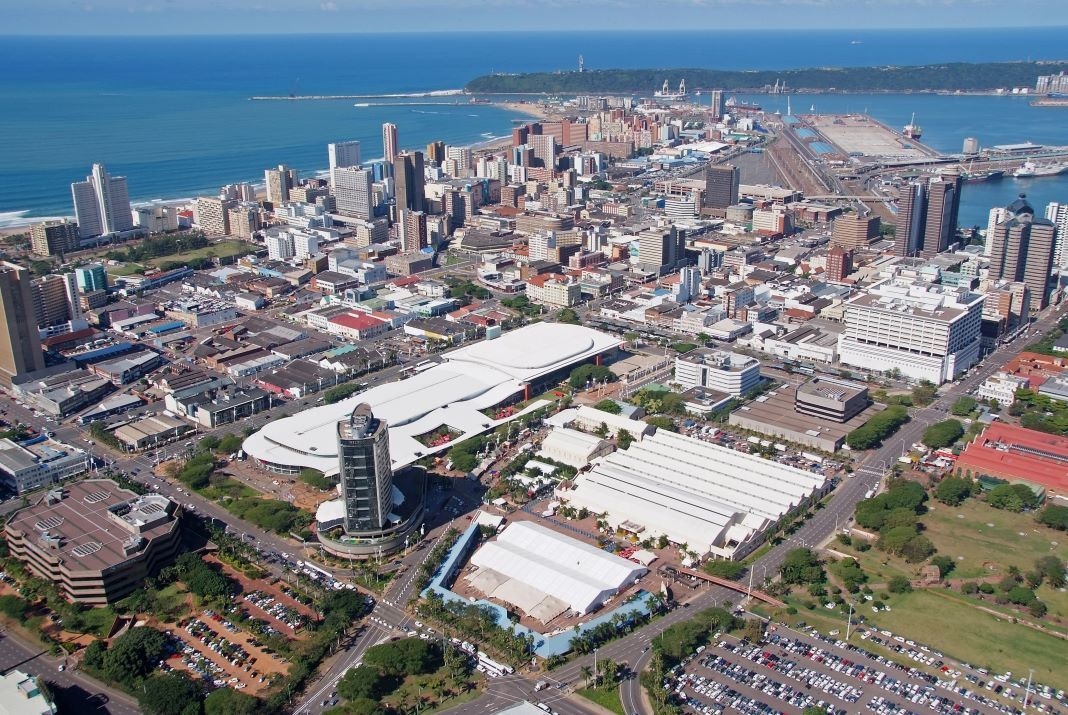
Durban has a precinct between a World Trade Centre and the Golden Mile that most serious investors haven't looked at hard enough.
They called it Motortown. A canal ran through it, moving goods between the uMngeni River and the port. The Beer Hall — built in 1914 — has sat dormant for many years, signs of an upgrade only now appearing. The warehouses are over a century old. The street grid is pedestrian-scaled — the kind most new precincts spend decades trying to replicate.
The numbers
Rivertown spans approximately 18 hectares — 16 privately owned — directly between the ICC and the Golden Mile. Existing GBA is approximately 200,000m². Under GB-Central zoning, permissible bulk reaches 1.28 million m² before bonus parking provisions. At 15% of permissible bulk, on privately owned land, the gap between what exists and what is permitted is the opportunity.
What changed in July 2025
Durban became the first South African city to join the World Trade Centers Association — over 300 separate licenses in metros across nearly 100 countries. The license sits at the ICC, placing a recognised trade node at the precinct's front door.
Melbourne's South Wharf — industrial land next to its Convention Centre — transformed through private investment into over 100,000m² of mixed-use development and 1,500 jobs. In São Paulo, Dubai and cities across the network, the pattern repeats: activate the relationship between a trade node and its surrounding precinct and the private sector follows.
What eThekwini has already done
Roughly R50 million invested in upgraded sidewalks, pedestrian infrastructure and landscaping between the ICC and the beachfront — signalling commitment and reducing the risk that deters private capital. A masterplan proposed a boulevard linking the ICC to the Golden Mile. GB-Central zoning and its bonus parking bulk provisions haven't featured in most feasibility models.
The capital structure
This is not a single-developer opportunity. Commercial, hospitality and residential accommodation require private capital and DFI participation. A well-located node with beachfront access, R50 million of public-realm investment and a World Trade Centre at its door is exactly where the DFI institutional framework should be deploying capital.
Bringing those parties together around a precinct with the planning framework, the development rights and a global trade catalyst is where the real work happens — and where the real value gets unlocked.
The bones have been here a century, the Beer Hall is still waiting and the canal is still down there. What has changed is what is sitting at the precinct's front door — and whether the right people are paying attention.