The state owns the buildings. The question is not whether to mobilise them — it's how.
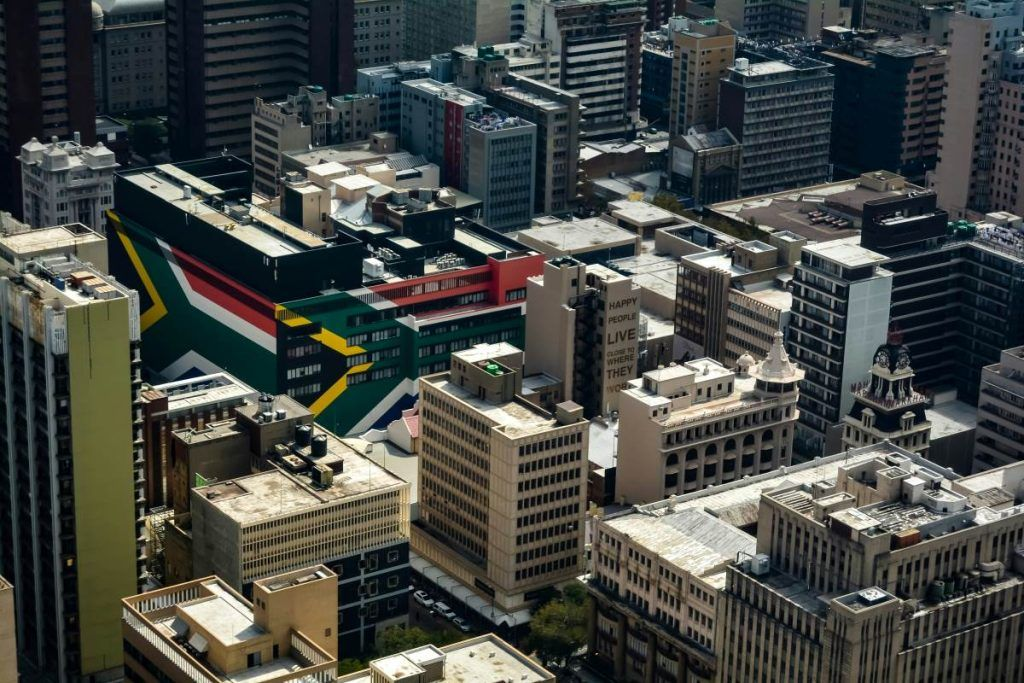
The DPWI manages approximately 88,000 buildings across 33.9 million square metres — over 10,000 condemned or derelict — while spending approximately R6 billion annually leasing private office space. Municipalities across the five major metros hold civic buildings, disused hospitals, and former administrative offices generating costs rather than value, as a combined housing backlog of 1.58 million units accumulates in those same cities.
There is a third pathway between retaining a liability and disposing of an asset.
A government building can be contributed as structured equity into a PPP. The private developer raises the capital required for adaptive reuse. The completed units are sold or leased into the affordable market. The state's balance sheet is not the source of development capital. The building is.
The mechanics exist. Intersite Asset Investments, a PRASA subsidiary, has structured long-term leaseholds against which private developers have raised finance for mixed-use and residential projects at station precincts across the country.
What makes this replicable at scale — and what has historically prevented it — is lease structure. A leasehold is bankable if it provides step-in rights for lenders, CPI-linked rent escalation, a term supporting the depreciation profile of capital deployed, and clear consent-to-assign provisions. Without those features it is a liability dressed as an asset.
In our illustrative model for a representative 100-unit inner-city adaptive-reuse transaction, a government building contribution of R20 million — structured as a 50-year below-market leasehold — bridges approximately 48% of the rental viability gap without cash expenditure, and mobilises approximately R93 million in private development capital: a multiplier of 4.7 times the public asset contribution. The SHRA institutional subsidy programme typically achieves 2.5 to 3.5 times.
The amended Treasury Regulation 16, effective June 2025, simplifies PPP approval for sub-R2 billion transactions to accounting-officer level. The South African National Property Company, announced in February 2026, is designed to consolidate and professionally manage the state portfolio with a commercial mandate. The institutional conditions are improving.
The barriers that remain are not legal. They are institutional: incomplete asset registers, absent standardised PPP documentation for building-as-equity transactions, and a governance culture that has treated inaction as the lower-risk option.
Those barriers are solvable. The framework for solving them is available.